Clinics we work with
The Korean clinics COMEDI works with for stem cell enquiries, how we choose them and how we are paid.
We list only clinics we have an agreement with, and we say so. This is not a ranking. Each listing uses the clinic’s own published facts and its registration status.
Overview
Cell365 Well Clinic
셀365웰정형외과재활의학과의원 신사점
Sinsa, Gangnam-gu, Seoul · Sinsa Station exit 8
Orthopaedic and rehabilitation medicine clinic with a stem cell centre. Own cells only: blood, bone marrow, fat. Cells from fat can be used on the same day, and the extra cells frozen and stored for later sessions (Cell Banking). Listed as active in the Medical Korea register (October 2026).
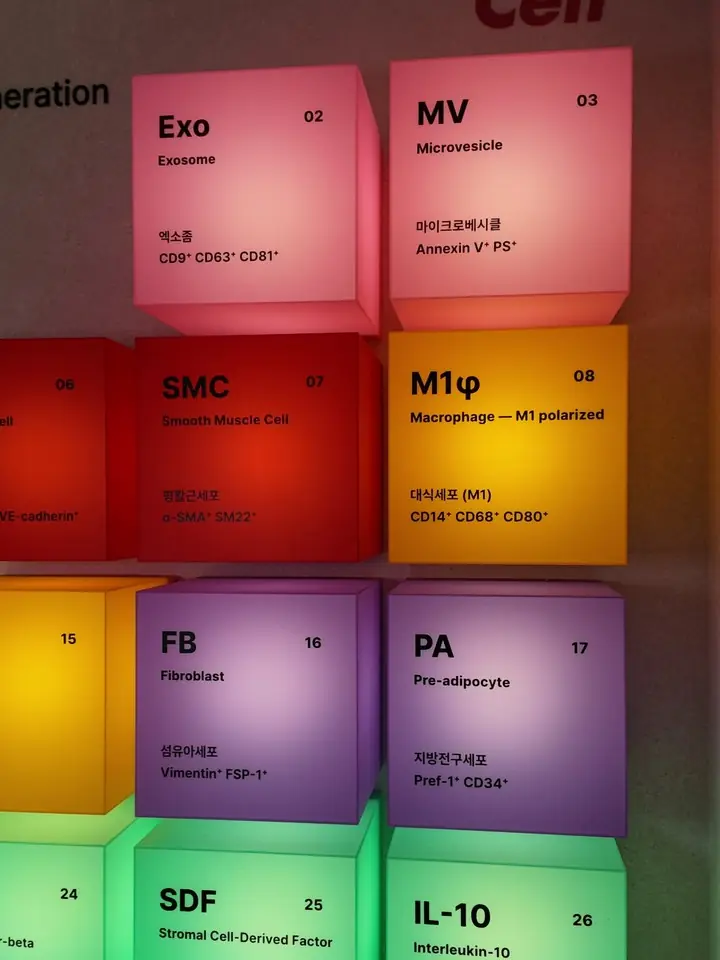
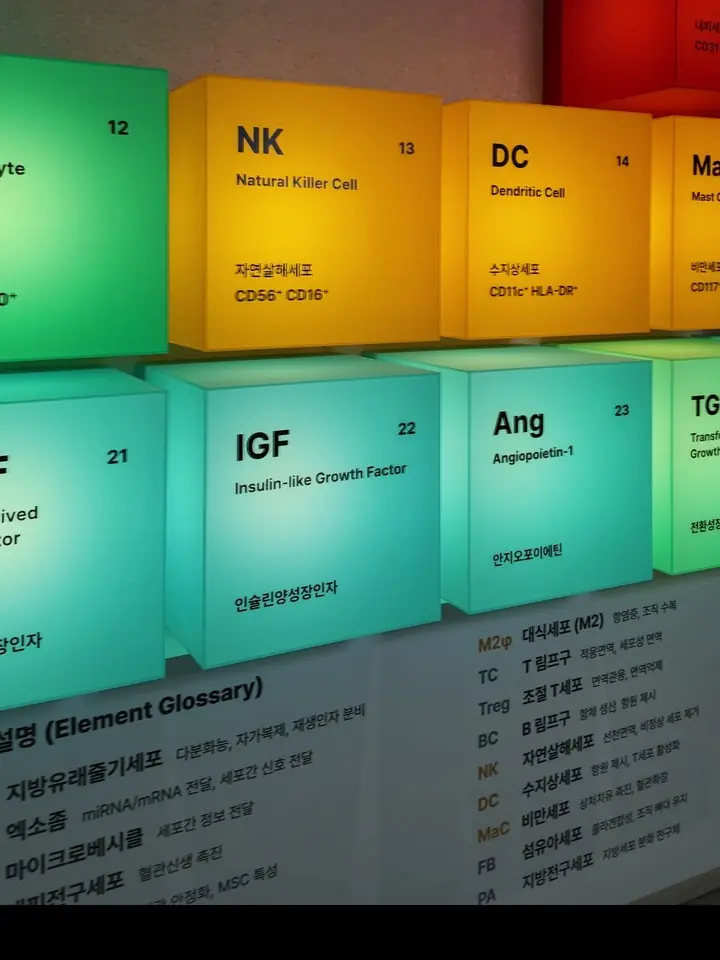
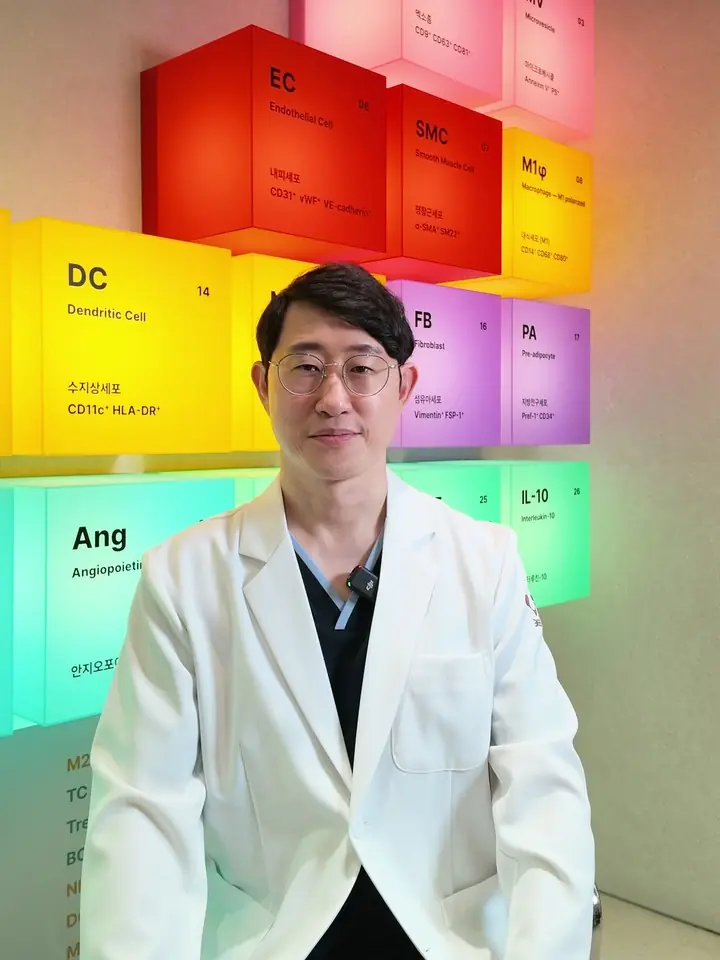
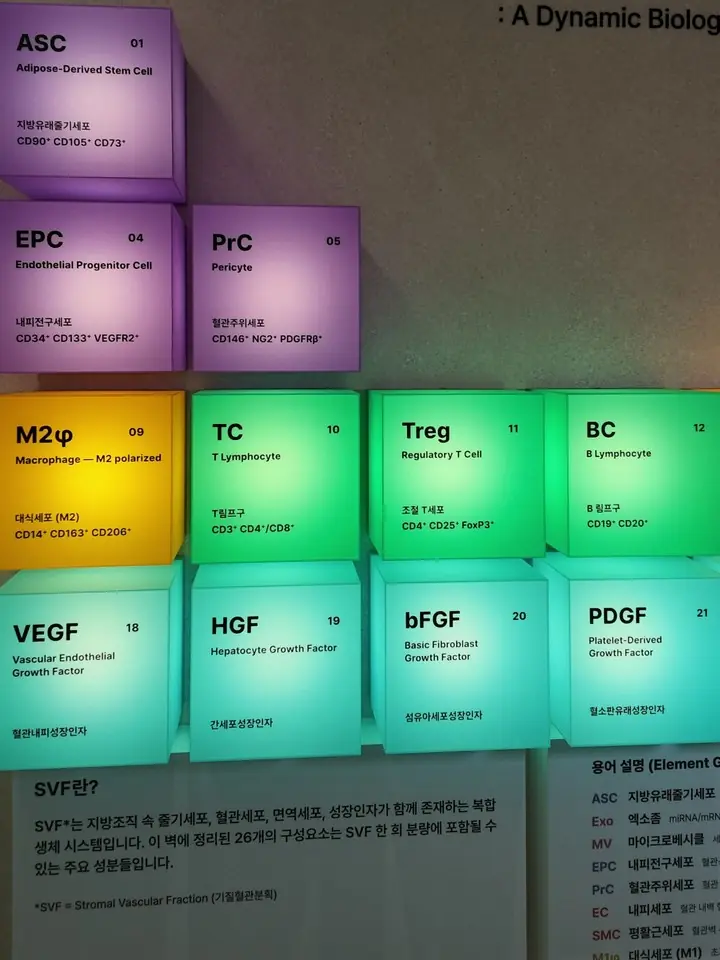
Inside the partner clinic, photographed by us at the clinic in October 2026.
About Cell365 Well
Cell365 Well uses only your own cells. Cells from fat can be given on the day of the harvest, and the extra cells can be frozen for later sessions (Cell Banking). The clinic does not culture cells to multiply them; harvest, separation and injection happen in one place, working with a partner biotech company and research lab.
Its program names describe where the cells go: Skin Cell for the face, Hair Cell for the scalp, Vascular Cell by drip, and Local Cell for one area such as a knee, shoulder or the spine. The doctor examines you first and says which, if any, is suitable.
Before any treatment, the clinic runs a blood test for infections such as hepatitis and HIV, platelet levels and bleeding problems. It postpones treatment for people with active cancer, on chemotherapy or soon after cancer surgery.
Cell365 Well’s own-cell programs →
From our partner clinic, Cell365 Well
Read the transcript
Depending on what you want, many kinds of treatment are possible. For appearance, IV and face injections are common. If you have hair loss, thinning hair or a receding hairline, the scalp can be treated too. If you've had knee arthritis for a long time, the knee can be treated. Problems in the spine or shoulder can be treated as well. Before that, we make an accurate diagnosis. Whether it's needed, and whether it will help or not, we explain in detail, and decide together which areas to treat. To keep it simple, we call the face Skin Cell, the scalp Hair Cell, and injection into the veins Vascular Cell. We can't name every other area, so injections into one area are called Local Cell. It's a nickname we gave it. It's our way of saying many areas can be treated. Local Cell covers shoulders, knees, the spine and other areas.
Read the transcript
First, before stem cell treatment, you need a blood test. We check for infections, whether platelets are too low, and for bleeding disorders. There's also medical history we need from you. The medicines you take, such as blood thinners: please tell us what you take and how. It helps to know if you have diabetes or high blood pressure. If you have, or have had, cancer, we need to assess that, so please tell us your medical history. Another important point: have you had liposuction before? If so, how many times, and on which areas, and the purpose: fat grafting, or removing a large amount to slim down. That information really helps us decide.
Read the transcript
But there are cases that need caution. There are two. First, infectious diseases such as hepatitis. They aren't a problem for the patient in this respect, but they can affect the medical and research staff, and above all, the lab can be contaminated. So we strictly check for HIV, hepatitis and other basic infections, and screen them out. One important thing is cancer. Active cancer, end-stage cancer, or cancer that is progressing quickly: in general, stem cell treatment may affect how the cancer progresses. It's a grey area. It doesn't necessarily do so, but because the possibility exists, we don't do it. It doesn't definitely have an effect, but we avoid it where possible. Even if the cancer has been treated to some degree, if you are on chemotherapy, or had cancer surgery recently, we can't be sure how things will go, so we tend not to recommend it. Five years after cancer treatment, we regard it as more or less cured. So after five years, it can be considered. Before that, it's better to watch how things go and then decide.
Questions
Who runs this guide, and do you earn from clinics?
COMEDI (OUR Marketing), a registered foreign patient coordinator. When you are treated at a partner clinic after an enquiry through us, the clinic pays us a referral fee. This does not change the price you pay, and we tell you before you book.
How do I check that a Korean clinic is registered to treat international patients?
Korean hospitals, clinics and agencies that attract international patients must register with the government under Article 6 of the Act on Support for Overseas Expansion of Medical Services and Attraction of Foreign Patients. The Korea Health Industry Development Institute publishes the register through Medical Korea.
Read next

Not sure where to start?
Send your question and any X-ray or MRI report you have. COMEDI, the registered coordinator that runs this guide, replies in writing and can ask a clinic for its written answer and an itemised quote.